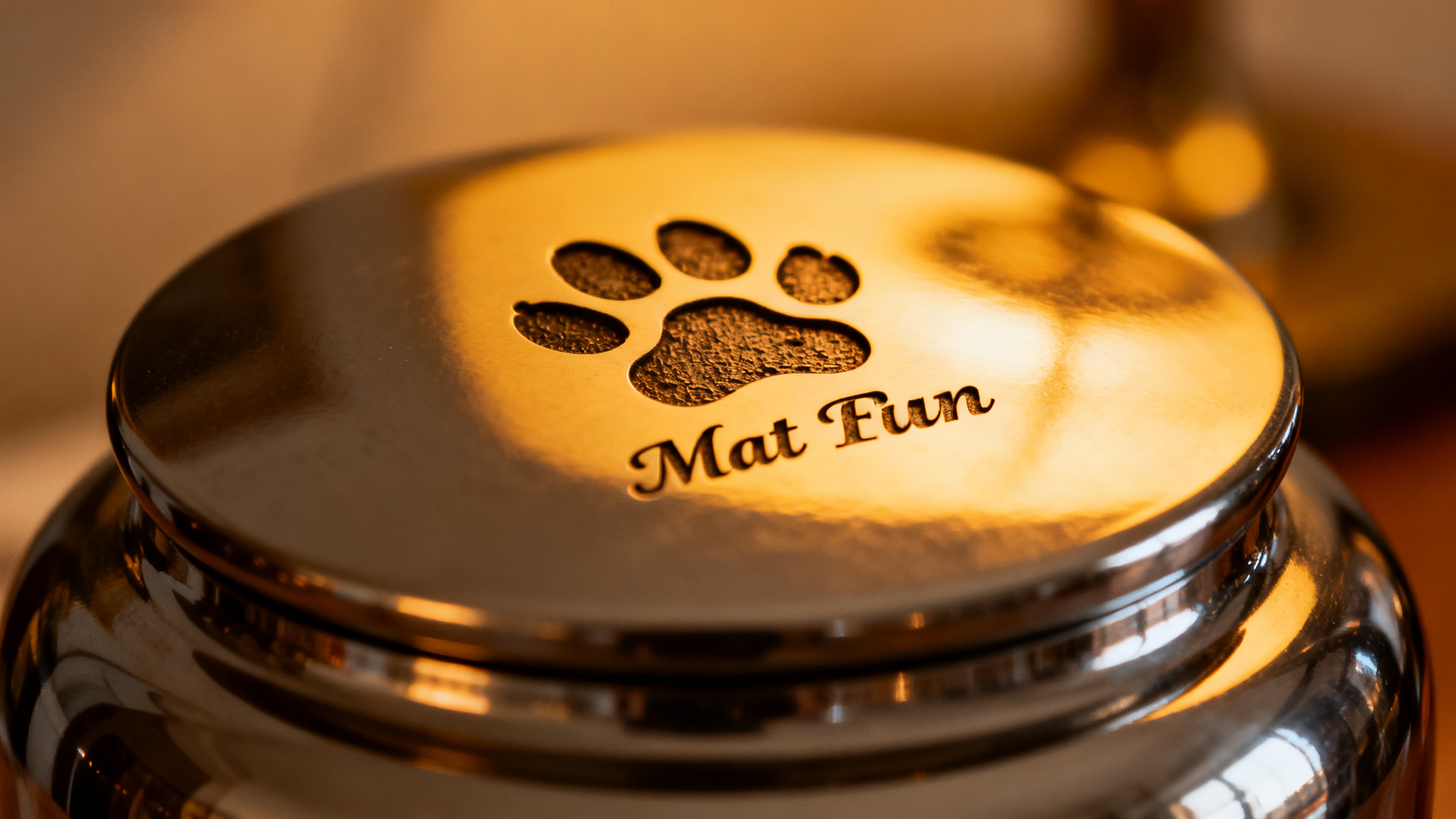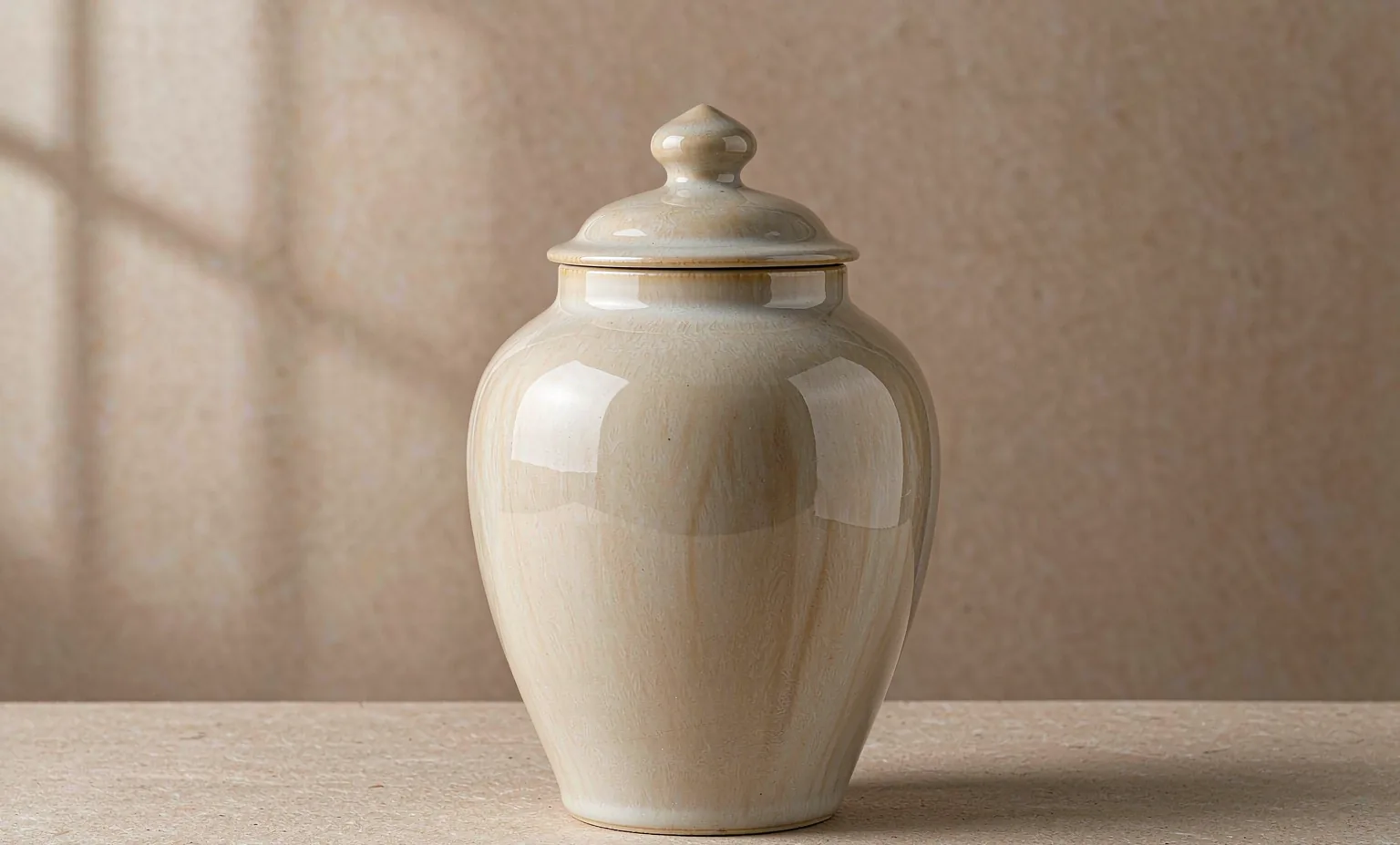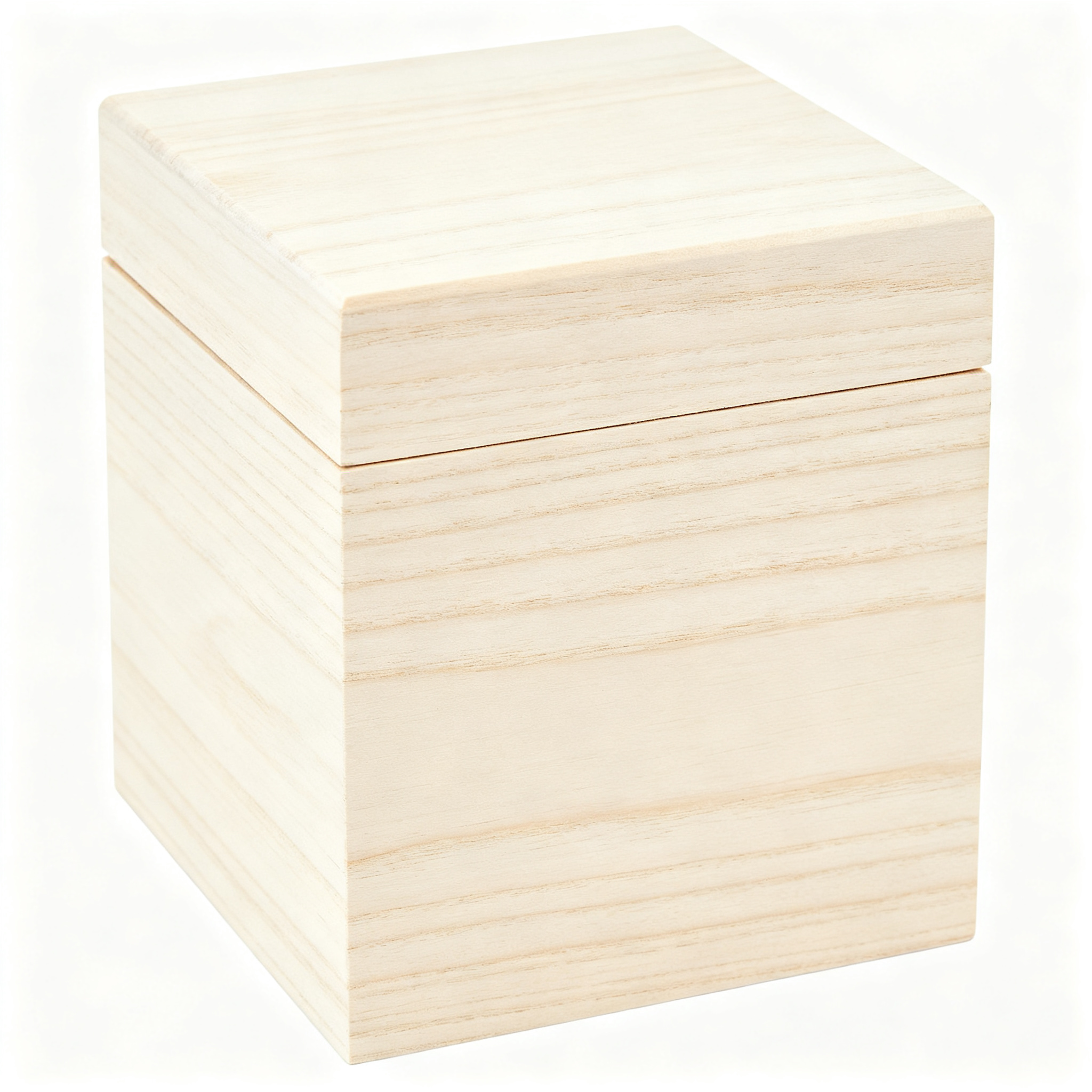
Why cat urns are rarely a capacity problem, what the bag actually measures, and how form and lining decide the sale.
More pet urns are sold for cats than for any other animal, and almost none of them fail because the box was too small. Cat urns are a form and presentation decision, and the capacity conversation that dominates dog urns is mostly irrelevant here.
The Most Common Case
A cat weighs between eight and twelve pounds, and the cremated volume that follows is small. Almost every full-size stock urn holds several times that volume, so a cat owner choosing between two boxes is not choosing capacity; they are choosing shape, finish, price and what fits on a shelf.
Cat Ashes and Bag Size
The bag a crematory returns for a cat is small, but its shape still matters: a wide, shallow bag does not fit a narrow, tall interior. That is why a cylinder-shaped urn can be a poor choice for a cat even when its volume is generous. The bag footprint decides more than the weight, and it is the question worth asking before the order.
Small Full-Size or Mini
A full-size urn for a cat leaves a lot of empty interior, which some families find inappropriate and others find reassuring. A mini box is a keepsake, not a primary urn, and offering it as the main container produces a return. The practical range for cats is the smallest full-size boxes plus a mini line sold as a secondary keepsake.
Shallow Boxes and the Frame
A cat urn is often shallow because it does not need depth, and a shallow box with a photo frame is the configuration that sells: the lid carries the picture, the interior holds the bag. The risk is that the frame and the bag compete for the same depth, so the clear space behind the panel has to be specified rather than assumed.
Form Over Capacity
The shapes that sell for cats are the house, the heart and the small square, because they read as a keepsake object rather than a container. A tall cylinder reads as utilitarian and is harder to place on a shelf. Where a buyer is choosing a range, two shapes and two finishes cover the category better than four sizes.
Multi-Cat Homes
A household with two cats is a common case, and it usually wants two boxes rather than one divided box. Two identical boxes read as a pair; one shared box with a divider reads as a compromise. Stocking a pair-friendly size and finish is more useful than stocking a divided box for a case that rarely occurs.
Clinic Stocking for Cats
A clinic that sees mostly cats should stock the small full-size size, one mini line and two finishes, not a full ladder of sizes. The cat case is decided quickly and often at the counter, so the display should make three options visible rather than offer a catalogue. Restock follows use, which for a cat-heavy practice is steady rather than seasonal.
A Note on Size Charts
A size chart that tells a cat owner they need the smallest size is doing its job, but it should also say that the smallest full-size box still holds far more than a cat needs. Without that sentence, a buyer interprets the recommendation as a tight fit and moves up a size, which produces a box that looks empty. The chart should guide the choice without implying scarcity of space.
See the size guide for the bands; the mini keepsake range covers the secondary box.