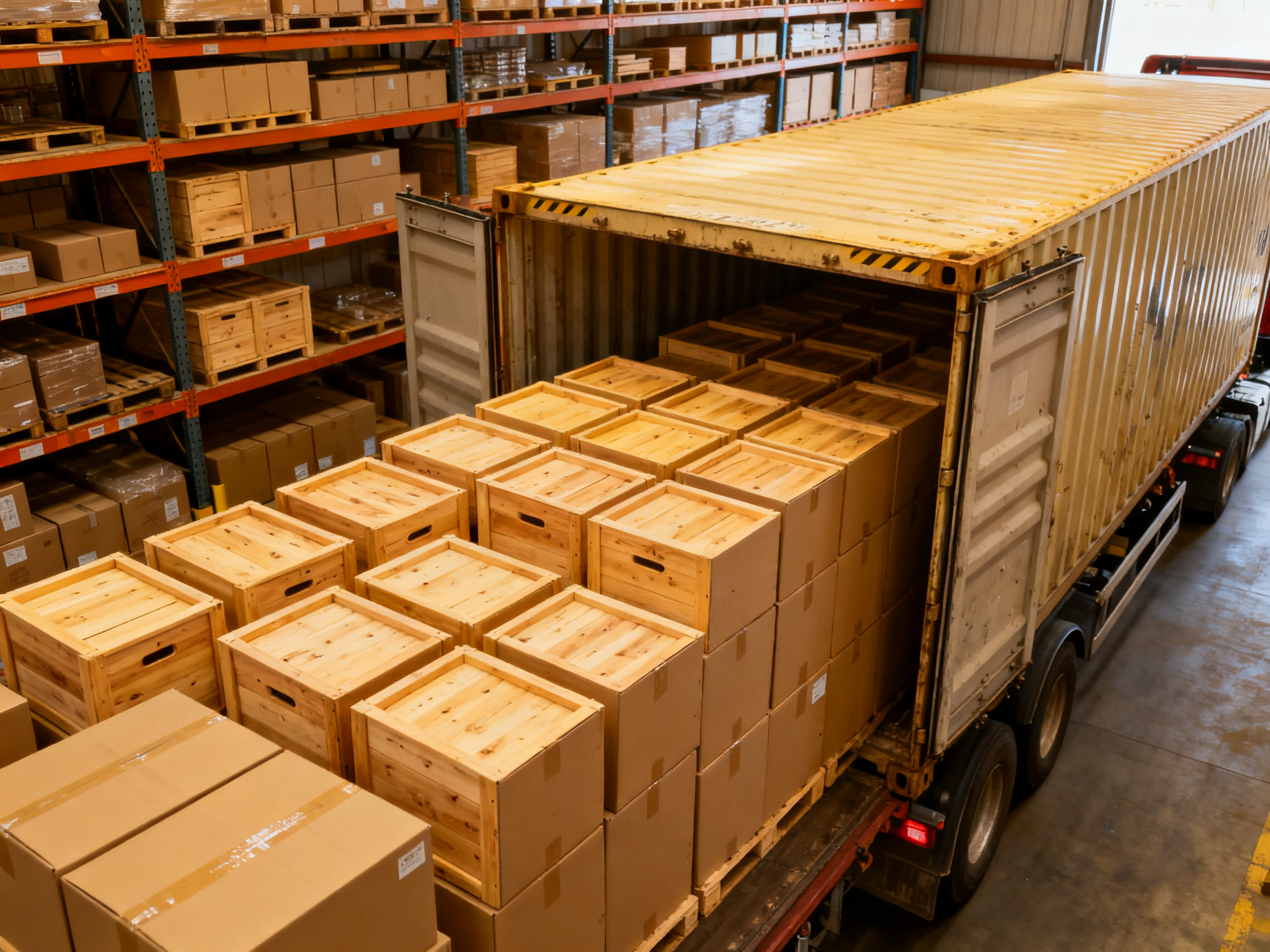
Where moisture inside a container comes from, how packing practice and desiccants reduce it, and what to check on arrival.
Wooden memorial goods rarely arrive damaged. They more often arrive damp, and damp is the failure mode that shows up weeks later as a musty smell, a lifted finish or a stain on a lining. The cause is usually not rain but condensation inside a closed container. This guide covers where the water comes from and what reduces it.
Where the Water Comes From
Three sources put moisture into a shipment: the goods themselves, the packaging and the air. Timber at 8% to 12% moisture content still holds water that will migrate as temperature changes. Corrugated board and paper wrap absorb and release humidity. And the air trapped in the container carries water that condenses when the box cools at night and warms by day.
Container Rain Explained
A container crossing climates moves through large temperature swings. Warm air inside holds more water; when the steel cools overnight, that water condenses on the ceiling and walls and then drips onto the top layer of cartons. The industry name is container rain. It is not a leak, and it does not require storm weather — a clear crossing between a warm port and a cold one produces it.
Moisture Content at Packing
Packing timber that is already at the top of the acceptable range leaves no margin for the voyage. Confirming moisture content before packing, rather than at the saw, is the first control. It applies to the product and to the pallet: a wet pallet under dry cartons wicks moisture upward into the load.
Carton and Liner Choices
Five-ply corrugated with internal dividers gives structure and slows moisture transfer better than a thin single wall. A liner inside the carton separates the unit from the board, and a moisture-barrier bag around the unit limits exchange with the surrounding air. Where a buyer wants no plastic anywhere in the shipment, the barrier is replaced by desiccant and by keeping the load dry at origin, and that trade should be stated rather than assumed.
How Desiccants Are Sized
Desiccant is sized to the volume it has to protect and the days it has to work, so a figure copied from another lane is not a specification. The useful input from the buyer is the transit time and the route; the useful output from the factory is a stated quantity per carton or per container. Desiccant also needs to be placed where the air moves, not buried at the bottom of a carton.
Loading Practice That Reduces Risk
Loading dry, in dry weather, with pallets that are not wet, and avoiding a load that fills the container so completely that air cannot circulate are all cheap controls. Leaving a small gap at the doors and keeping cartons off the floor of the container reduces the surface that condensation reaches. Photographs of the loaded container before departure document what went in and in what condition.
What to Inspect on Arrival
Check the top layer first, since condensation drips downward. Look for water staining on carton tops, soft corners, a musty smell on opening, and any discolouration on the wood or the lining. Photograph the carton label with the stain in the same frame, because a claim needs to show which carton and which batch were affected.
When a Mould Claim Is Legitimate
Mould needs sustained moisture, so a genuine claim usually involves a visible pattern, an odour and a staining pattern that follows the load rather than a single unit. A single spotted piece in an otherwise dry carton is more likely a finishing or storage issue than a transit one. Either way, the response is the same: photographs, batch reference and a written plan within three working days.
See the transit crack guide for the other failure mode; the packaging section of the shipping guide covers carton and pallet configuration.