One full-size urn holds the main ashes share while keepsake urns carry small portions to relatives. A guide to matching capacity and ordering both.
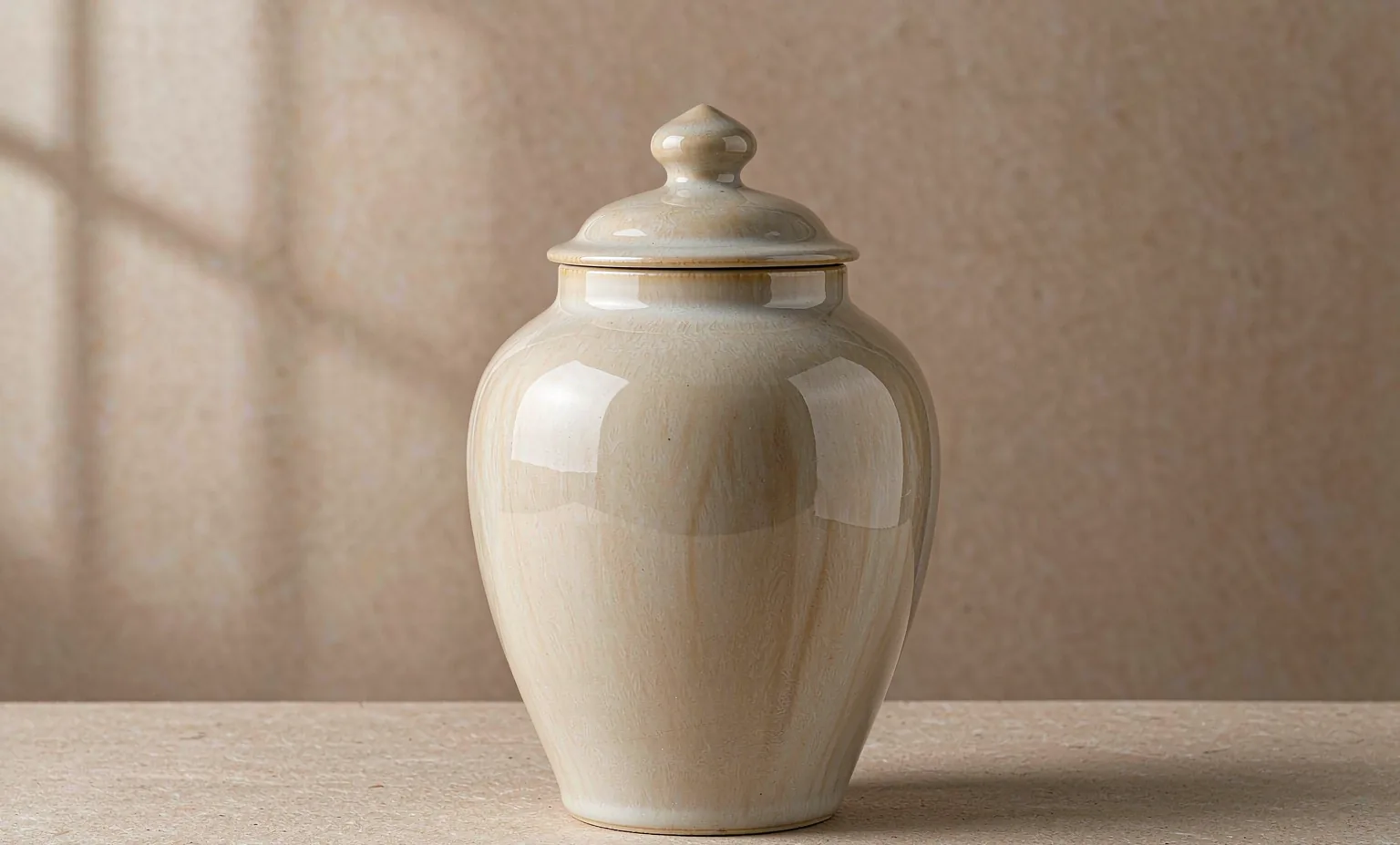
When a family divides a pet's ashes, one full-size urn holds the main share and keepsake urns hold small portions that relatives keep in their own homes. The decision is driven by total capacity and the number of shares, not by the number of boxes on the shelf. This guide explains how the two formats differ, how to match capacity to the pet's weight, and how to order a main urn plus keepsakes together without over-buying volume.
What a Keepsake Urn Actually Is
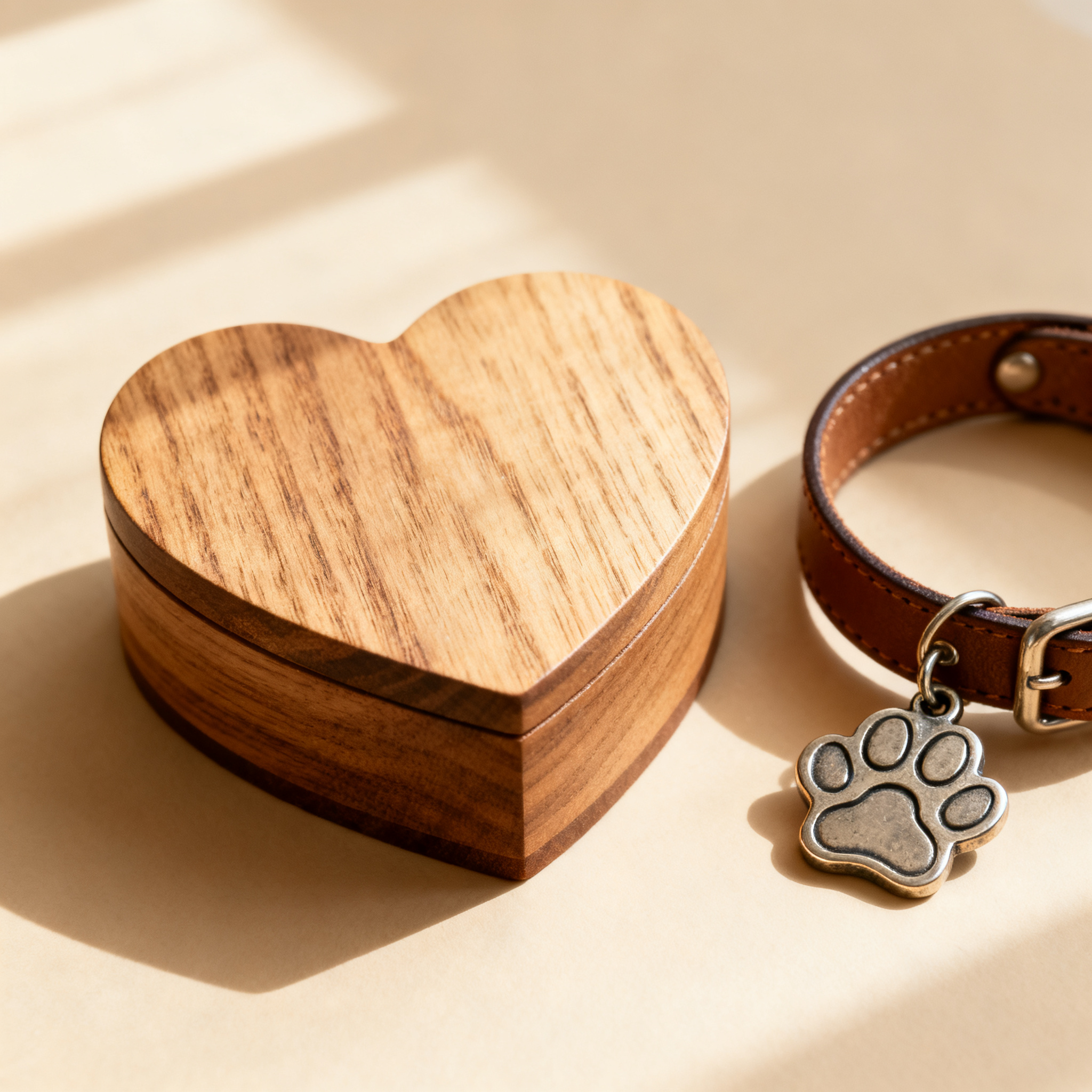
A keepsake urn is a small memorial piece designed to hold only a small portion of the ashes, typically for one relative or one display place. The range includes mini wooden keepsake boxes, heart- and pendant-style pieces, and charm or jewelry items that carry a tiny compartment. A keepsake is not a smaller version of a full urn; it is a secondary piece that accompanies the main urn, and it should never be sized as if it were expected to hold the entire ashes.
How Ashes Are Divided in Practice
After cremation the ashes can be divided among several containers. The full-size urn receives the largest share, usually kept by the closest family member. Each keepsake receives a small portion for a sibling, adult child, grandparent, or a person who shared a close bond with the pet. Some families keep one keepsake at home and place the rest in a small display box, while others pair a wooden keepsake with an ash pendant necklace. The split follows the family's wishes; the supplier's role is to provide containers whose interior capacity is stated plainly.
Matching Capacity to Pet Weight
Capacity should be worked out from the pet's weight before either format is chosen. The general industry rule is roughly one cubic inch of capacity per pound of body weight, and buyers should leave headroom because the ash bag, lining and seal occupy part of the interior; about 75 percent of the listed volume is usable in practice. Start by sizing the full-size urn to that weight, then size the keepsakes to the number of shares. Do not divide the main urn's capacity by the number of relatives to arrive at a keepsake size; keepsakes are meant for a small portion, and a box that looks large enough on the outside can still have a modest ash compartment behind the frame or lid.
Ordering a Main Urn and Keepsakes Together
Ordering the two formats in one purchase simplifies production and documents. Within the same product line, mixed SKUs can be combined to reach one MOQ on a first order. The standard MOQs are 50 pcs for unfinished pine urns, 30 pcs for finished wooden urns and casket-shaped boxes, and 100 pcs for mini keepsake urns and jewelry. A first trial can be placed at 50 percent of the stated MOQ with a small-lot surcharge per unit, which is credited back against the second order once it reaches full MOQ. Samples of one to three pieces are available separately before committing to a bulk order.
What to Ask a Supplier Before Ordering
For each SKU, request the interior dimensions in cubic inches, whether the compartment seals, what lining or insert is included, and which accessories are available as matches to the keepsake line. For the main urn, confirm the moisture content, sanding finish and carton configuration. Keeping these questions consistent across suppliers makes the comparison a direct one, and the size guide on this site lists capacity by pet weight to use as the baseline.
For buyers stocking both formats, the sensible mix is a stable core of full-size urns by common weight bands, plus a shallow assortment of keepsake pieces for bundling and gifting. That combination serves the family that wants one main memorial and the relatives who each want a small share to keep nearby.