Can an old inscription be removed? Sometimes. What a workshop can sand back, and what it cannot.
A second-hand urn, an inherited box, or a unit bought for the wrong pet: sooner or later someone asks whether the engraving can come off. The answer depends on how deep the mark went and what the surface around it is.
Laser Marks Are Shallow
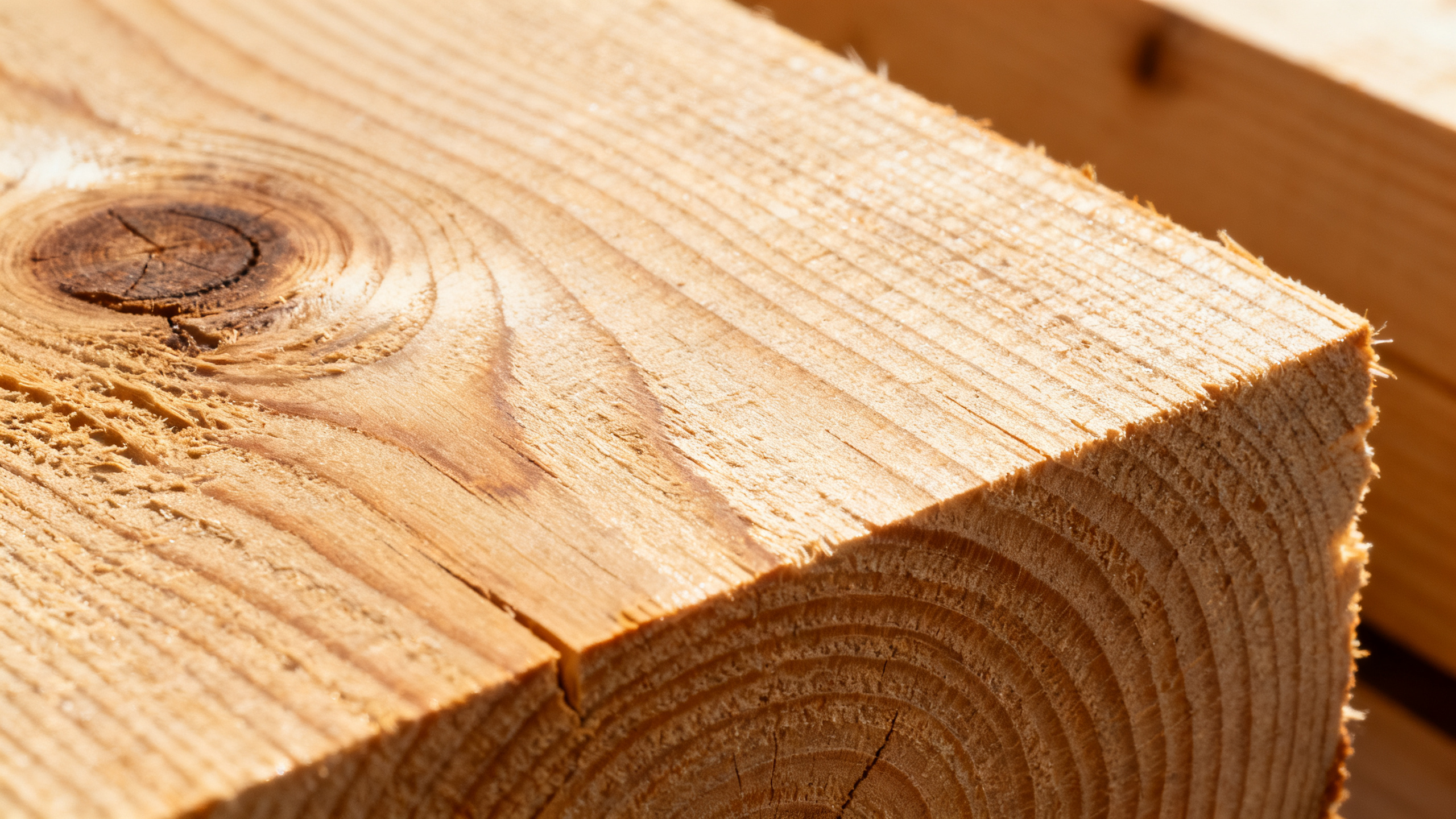
A laser engraving on bare or lightly oiled wood sits in the top fraction of a millimetre. On an unfinished box it can usually be sanded back with 120 then 220 grit, and the surface will take a new finish without a visible scar. That is one reason the unfinished line exists.
Paint and Lacquer Change the Answer
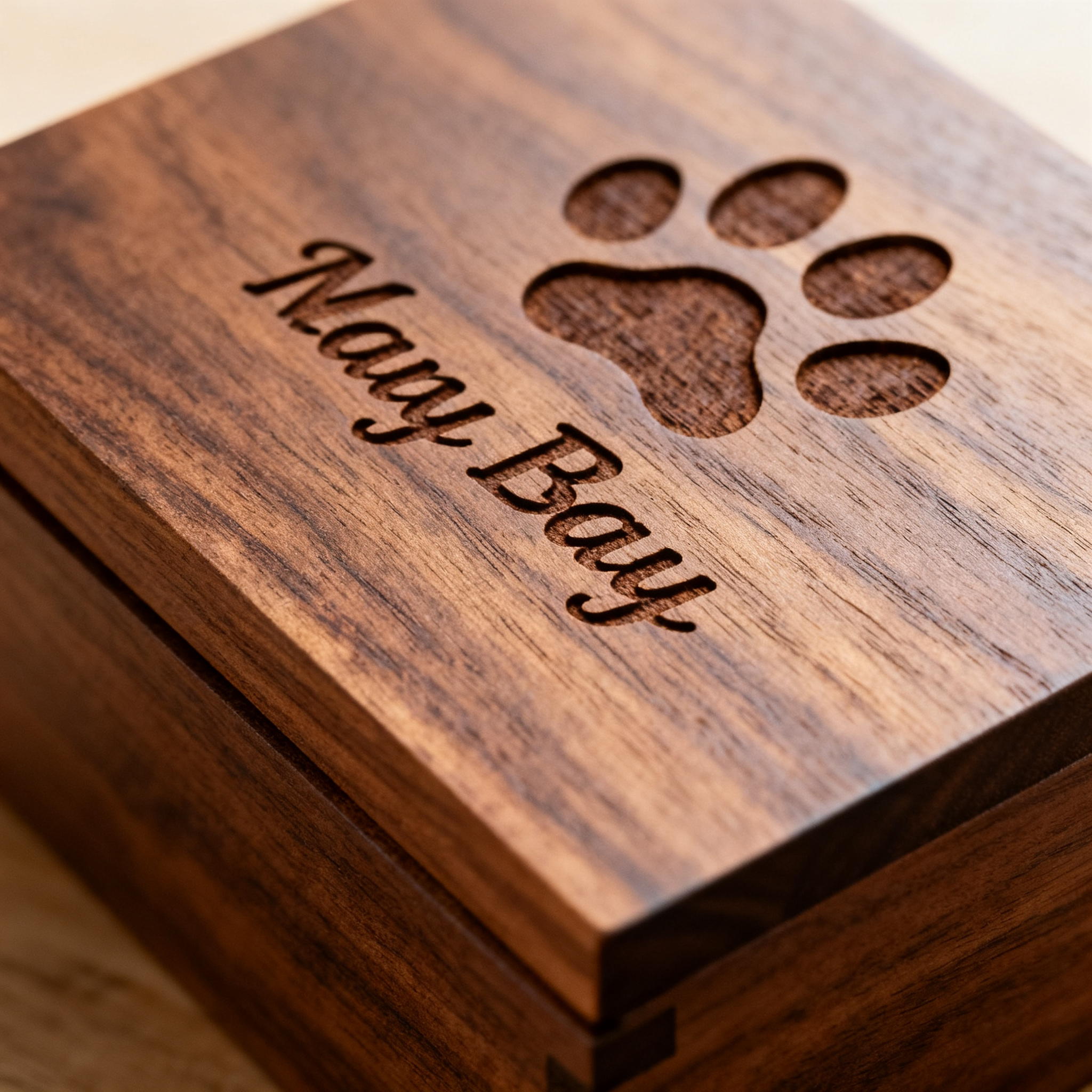
On a lacquered or painted box the mark sits in the coating, and sanding it out means sanding through the film locally. The result is a patch with a different sheen under light, visible from an angle even when the colour matches. On a dark walnut lid this is nearly impossible to hide; on a pale pine lid it is easier.
Deep Carving Is a Different Job
CNC carving or a routed band is structural: the material is gone. Removing it means planing the panel down, which changes the lid thickness and the fit. In practice the answer is a new lid, made to the same pattern, rather than a repair.
Colour Fill Complicates It
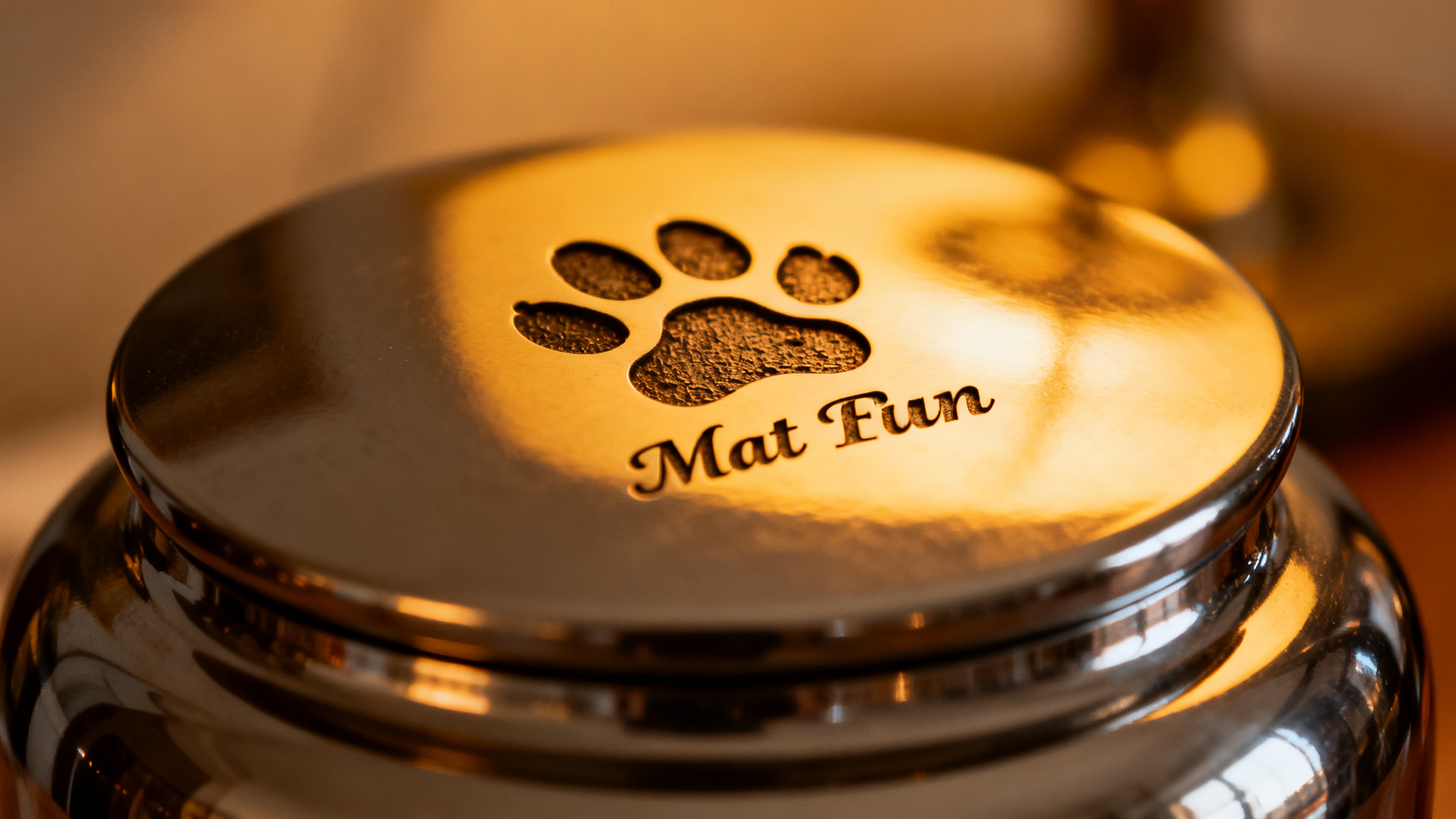
Where the engraving was filled with colour, the pigment sits in the cut and often in the surrounding grain. Sanding removes the wood but leaves the pigment in the pores, which shows as a grey ghost. Filled engraving is effectively permanent.
What a Workshop Can Offer
Three honest options: sand back and refinish the existing lid, replace the lid with a new one in the same species and finish, or overlay a thin plate or frame panel over the marked area. The third is the cheapest and the most visible; the second is the cleanest and costs a lid.
When to Say No
Say no when the mark is filled, when the surface is a lacquered dark hardwood, or when the box is a casket that was built for one use. A refusal costs a conversation; a bad repair costs a customer.
The Order of Operations
If the plan is to re-engrave, sand first, refinish second, engrave third. Engraving into a repaired surface produces a line with different depth where the two areas meet, and that is the detail an inspector notices.
See the engraving options article, or check the unfinished line for blanks.