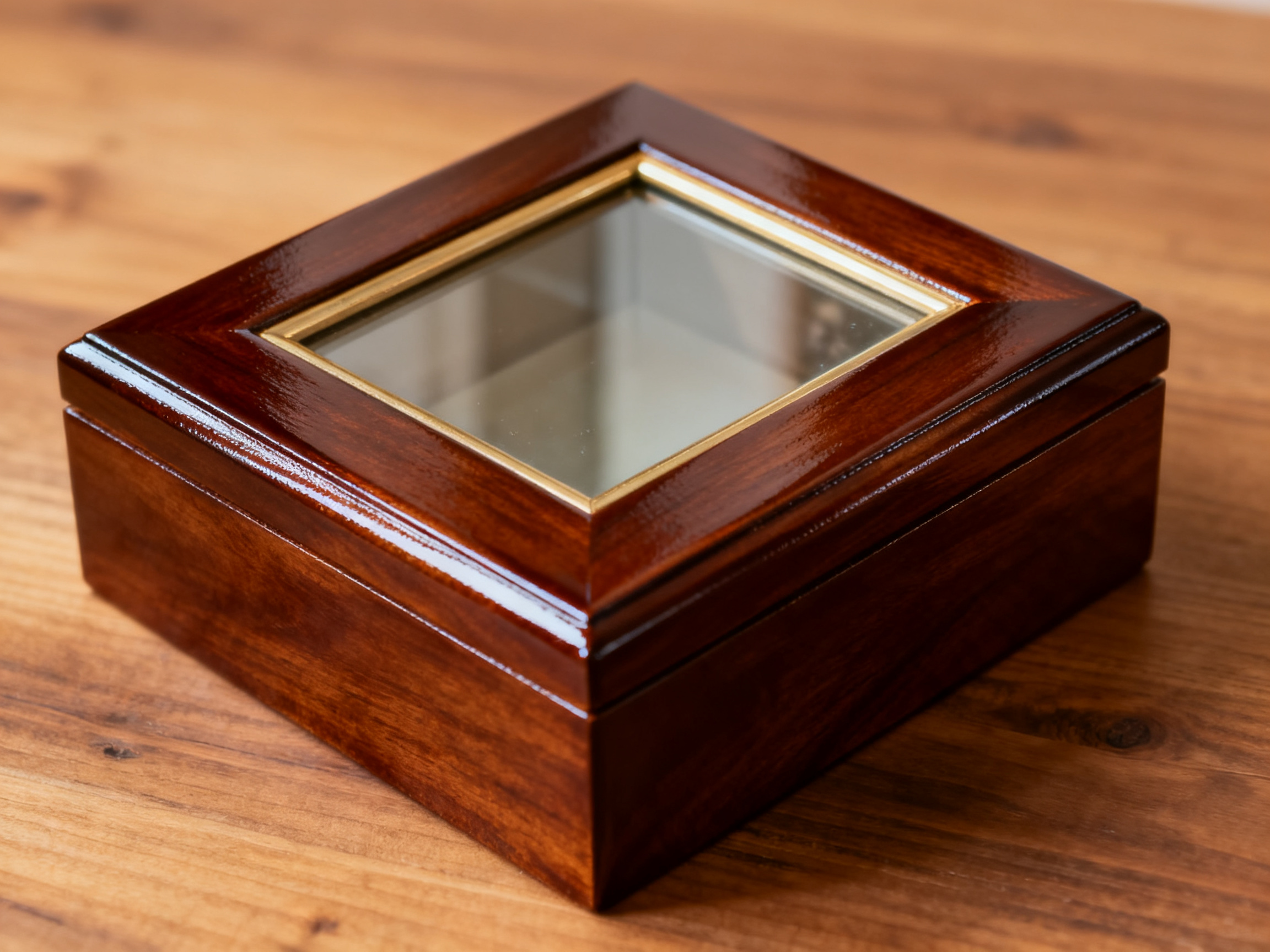
Landed cost, operating cost, markup versus margin, and where keepsake add-ons change the arithmetic of a memorial listing.
Pricing a wooden urn for resale is arithmetic, not intuition, and the arithmetic starts before the unit price on the quotation. Landed cost, operating cost and the difference between markup and margin decide whether a listing makes money at the price the market will pay. This guide walks through the calculation a reseller can run on a single SKU before committing to an order.
Start From Landed Cost
Landed cost is what one unit costs once it is sitting in your warehouse, not what the factory quotes per piece. It brings together the unit price, the freight share per unit, insurance where applicable, duty and fees at entry, and the inland delivery to your address. Because freight and duty are charged per shipment rather than per unit, landed cost changes with order size and carton efficiency, which is why two quotes with the same unit price can produce different landed costs.
Adding Operating Costs
Above landed cost sit the costs of selling: marketplace or platform fees, payment processing, packaging if the unit is reshipped, storage, and the labour of listing and customer service. Returns and replacements belong here too — a breakage allowance is a real cost even when the rate is low, and it should be built into the price rather than absorbed after the fact. Writing these down per unit, rather than as a monthly total, is what makes a price decision repeatable.
Markup vs Margin
Markup is the percentage added to cost; margin is the percentage of the selling price that remains after cost. They are not interchangeable, and mixing them is the most common pricing error in small resale operations. A price built by doubling cost is a 50 percent markup but a 50 percent margin only at that exact ratio; add a fee or a return and the realised margin falls below what the markup suggested. Work in margin when setting a shelf price, and in markup only when converting a cost into a candidate price.
Where Keepsakes Change the Math
Keepsake boxes, charms and ash pendants carry a higher price-to-volume ratio than a full-size urn: they take little freight space and few packaging materials, so their landed cost is dominated by the unit price rather than by logistics. That makes them useful for lifting the average value of an order without adding much shipping exposure. They also carry different minimums — 100 pcs for mini keepsakes and jewelry against 50 pcs for unfinished pine and 30 pcs for finished boxes — so a first order that mixes a full urn and a keepsake should be planned per line.
Price Bands and Positioning
Most markets settle into a few visible price bands, and a new listing is read against them before it is read on its own merits. Positioning is a decision about which band to sit in, supported by the finish, the frame, the lining and the photography — not by the price alone. An unfinished box and a lacquered framed box occupy different bands because they are different products to the customer, even when the body is the same size.
Testing a Price Before Committing
Before a bulk order, test the price against a small quantity: cost the SKU at landed cost, set the price by target margin, and check whether the listing attracts interest at that band. A sample order or a below-MOQ trial at 50 percent of the stated minimum, with a small-lot surcharge credited against the second order, is enough to validate a price band without committing to full volume.
For the cost structure behind the factory quotation, see the unit price breakdown; for how channels differ, see the North America buyer guide.