The seven fields that turn a vague pet urn price into a quotable one, and why the first quote is usually a range.
A first pet urn quote is often a range because the enquiry did not contain enough to price the job. That is not a supplier being evasive; it is a supplier pricing what was asked, which was a category rather than an order. Writing a complete RFQ for wooden memorial boxes is the fastest way to a real number.
Why First Quotes Are Vague
Pricing a wooden pet urn depends on size, species, finish, lining, closure, engraving, packing and quantity. An enquiry that names only the product leaves six variables open, and the supplier answers with a range that covers all of them. The buyer then compares ranges from three suppliers and learns nothing. Supplying the variables collapses the range into a price.
The Seven Fields
A complete RFQ states: the product and size, the material and finish, the quantity and mix, the destination and trade term, the marking and packaging, the timeline, and the attachments. Those seven fields cover every cost driver that matters. Where one is unknown, say so explicitly rather than leaving it out, because an unknown stated is easier to price than an unknown implied.
Defining the Product
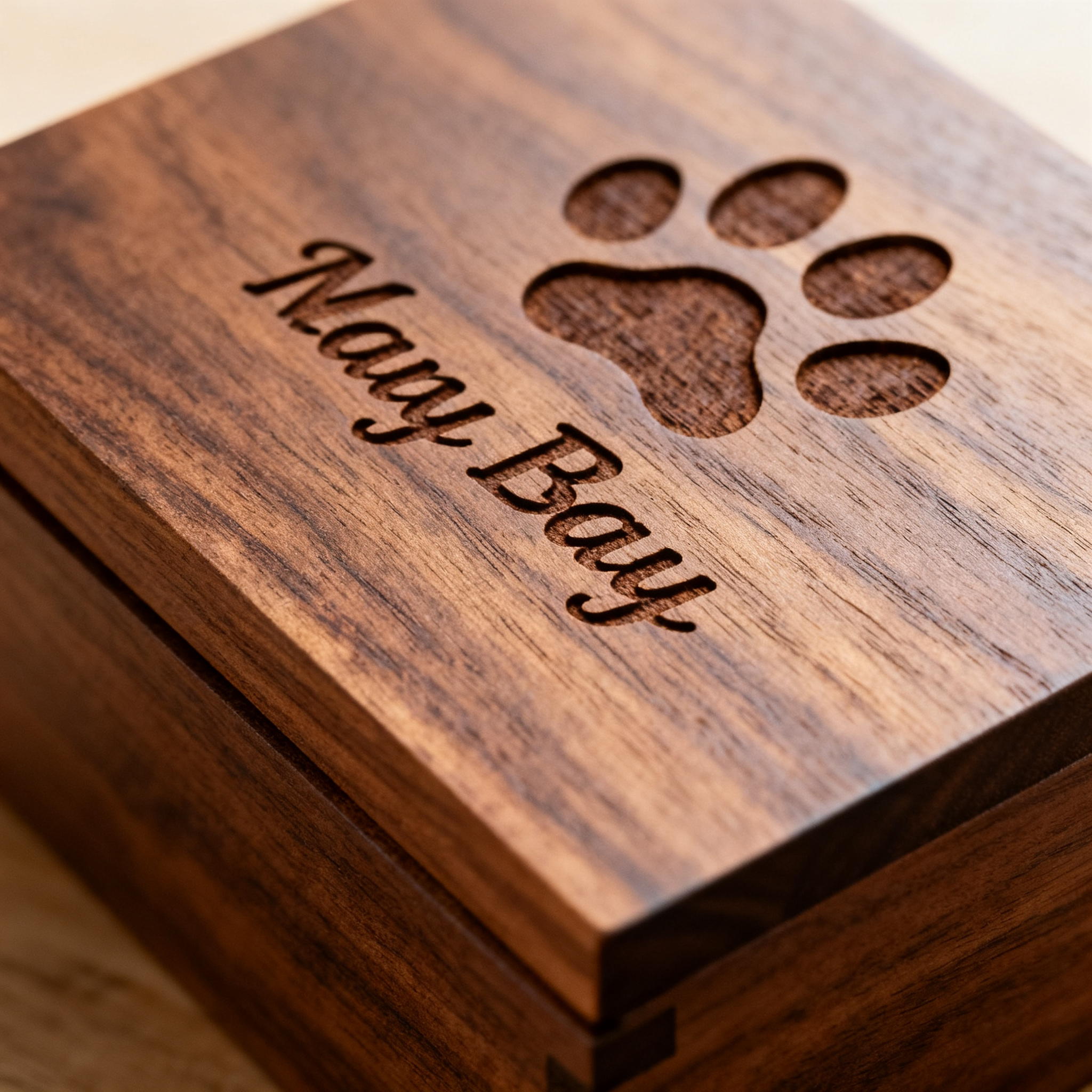
Describe the article by what it does and how it is built: a lidded wooden box for cremated remains, with a photo frame on the lid, in pine, unfinished. Attach a photograph or a dimensioned sketch. A reference to another supplier's product is acceptable as a starting point, provided the differences are stated — size, finish, or an added feature.
Quantity and Mix
State the total and the split: 200 pet urns across two sizes at 120 and 80, three finishes, one engraving layout. Volume drives price and so does complexity, and a mix has a cost that a single-SKU order does not. Where a trial order is intended, say so and ask for both the trial price and the bulk price rather than discovering the difference later.
Destination and Trade Term
The destination country and city determine freight, and the trade term determines what is included. FOB Qingdao, CIF to a named port, and DDP to a warehouse are three different prices for the same goods. Ask for the term you intend to use, and where you are comparing suppliers, ask all of them for the same term.
Marking, Packing and Documentation
State whether the unit needs engraving, a label, a gift box or a private-label pack, because each adds a step. State the packing expectation: cartons per pallet, pallet configuration, and whether the goods ship FCL or LCL. State the documents required, especially where the goods are plant articles and a certificate is needed.
Timeline and Its Starting Point
Give the date you need the goods, and ask for the lead time measured from deposit rather than from the order date. A quote that says 20 days without saying from when is not a commitment. Where the date is fixed by a season or a launch, say so, because it changes the answer rather than merely the urgency.
Attachments Worth Sending
A dimensioned sketch, a photograph of the target look, an artwork file for marking, and a packing reference if you have one. Each attachment removes a question. Where a buyer has an approved sample from another supplier, a photograph with dimensions is more useful than a description, provided the licence position is clear.
What Not to Include
Do not include a target price in a first enquiry unless you want a quote engineered to it, and do not include a competitor's quotation as a negotiating device before the supplier has priced the job. Both distort the answer, and the second is a reason many suppliers stop replying. Ask for a price, then negotiate with the facts.
Reading Quotes Side by Side
Normalise before comparing: same term, same quantity, same packing, same documentation. A quote that is lower because it excludes a certificate or a gift box is not lower. A simple table with the seven fields as columns turns three quotes into a decision rather than a feeling.
See the price drivers guide for what moves a pet urn unit price; the sample guide covers the trial-order step.