What every carton should carry, which handling symbols are worth printing, and why a mark template saves arguments later.
A carton carries two kinds of information: what is inside, and how to handle it. Both are printed marks, both are read by people who never see the invoice, and both prevent the failures that turn into claims. This guide covers the marks worth putting on an export carton and the ones that are decoration.
What a Shipping Mark Is For
A shipping mark identifies a consignment and its contents for everyone who handles it between the factory and the shelf: the warehouse, the forwarder, the customs broker, the receiving dock and the returns desk. It is not branding. When a carton cannot be identified, the first cost is time at the receiving dock and the second is a mismatch between what arrived and what was ordered.
The Marks on Every Carton
At minimum: the buyer or consignee reference, the purchase order or shipment reference, the SKU, the quantity per carton, the carton number within the shipment, and the gross and net weight. Where a marketplace requires a unit-level label, that is a separate label rather than a substitute for the carton mark. A carton that carries only a product name is a carton that will be opened to find out what it is.
Handling Symbols That Matter
The standard handling symbols are worth printing because they are read without language: fragile, this side up, keep dry, and stacking limit. Each one should correspond to something the packaging actually achieves. Printing keep dry on a carton that is not moisture-protected is worse than printing nothing, because it invites a claim the packaging cannot answer.
Fragile and This Side Up in Practice
A fragile symbol does not change handling; it signals that the contents need care and that a damage claim will be examined. This side up matters where the unit inside is held by a divider that works in one orientation only. Both symbols should be printed where they can be seen with the carton stacked, which usually means the ends as well as the face.
Stacking and Weight Limits
A stacking limit tells the warehouse how high the cartons can go. It should be derived from the carton's compression strength rather than from the height of the container, and it should be consistent with how the factory actually loads pallets. Where a limit is printed but ignored at loading, the marks stop being trusted, and later cartons get handled worse rather than better.
Marks That Customs and Warehouses Read
Consignee reference and carton numbering are the marks read at entry and at receiving. A carton numbering that matches the packing list is what lets a warehouse check a delivery by counting rather than by opening. Where a shipment is consolidated, the marks also need to identify which supplier's cartons belong to which consignment, or the consolidation warehouse will guess.
Printing Method and Durability
Marks printed on the carton board survive handling better than labels stuck on afterwards, which peel in humidity. Where labels are used — an FNSKU, for example — they should be applied to a dry surface and positioned where they will not be scuffed by the pallet wrap. A mark that cannot be read on arrival is the same as no mark.
A Mark Template Worth Reusing
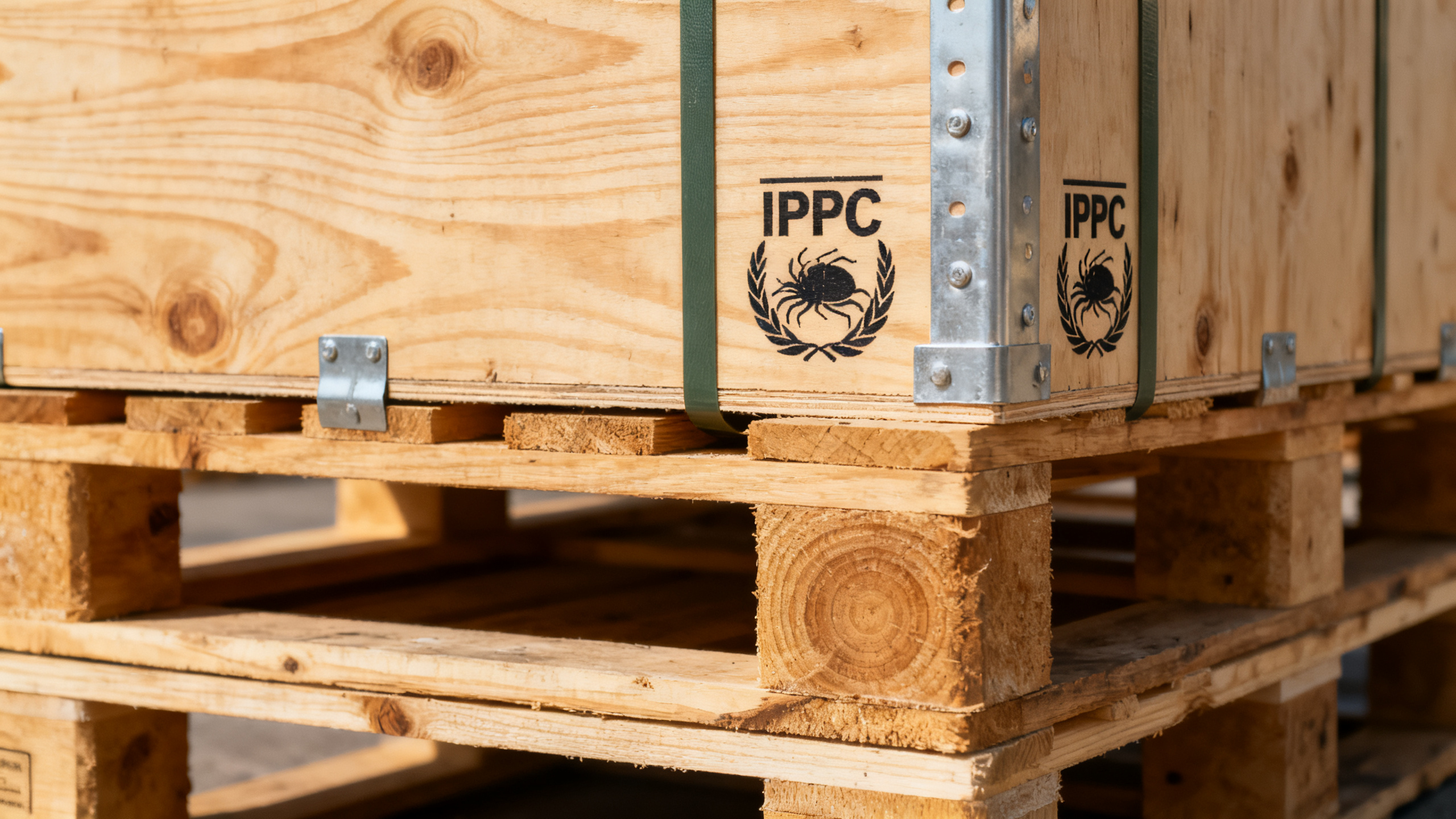
Build one template with fields rather than one design per order: consignee, reference, SKU, quantity, carton x of y, weights, symbols, and a space for the IPPC mark on the pallet. Reusing a template keeps the information in the same place on every carton, which is what makes a delivery quick to check.
See the packaging rules comparison for what each market requires on wood packaging; the Amazon guide covers unit-level labels.