Screw-down, sliding, hinged and panel closures compared on sealing, access and long-term fit, with what to specify in the RFQ.
The closure on a wooden urn decides how securely the ashes stay inside, how easily a keepsake portion can be added later, and how the piece behaves after years of sitting on a shelf. Buyers often choose a shape first and accept whatever lid comes with it, then discover that the closure does not match how the urn will be used. This guide compares the four closure types we build and the points worth settling before an order is placed.
Screw-Down Lids
A screw-down lid is fixed with screws through the base or through a lid panel, closing the body with steady pressure across the rim. It holds the lid flat and resists accidental opening, which suits urns that will be displayed at height or handled in a busy clinic. The trade-off is access: opening it needs a screwdriver, so it is not the right choice for a family that expects to add a small portion of ashes later.
Sliding Lids
A sliding lid travels in a machined groove and closes the box along one axis. It gives quick access without tools and is common on keepsake boxes where a lock of fur or a small portion is placed and checked. Sealing quality depends on how tightly the groove is machined, since the lid is held by friction rather than by fasteners; a loose fit lets the lid shift in transit. Buyers who want a sliding lid on a full-size urn should ask how the lid is retained once closed.
Hinged Lids
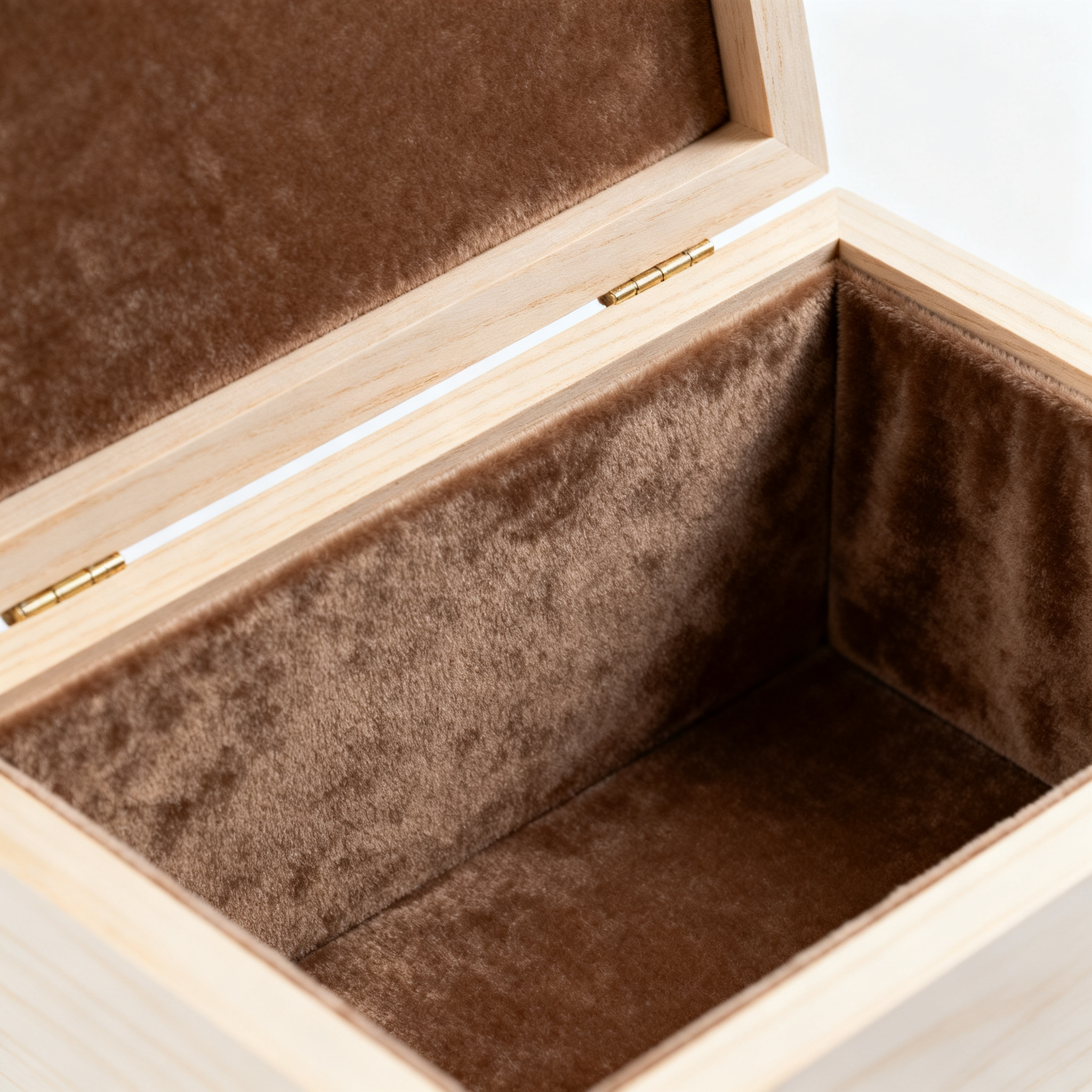
A hinged lid stays attached to the body, so there is no separate panel to lose and the interior is reachable in one motion. Hinges need a clean recess and firm screws, and the lid should rest flat rather than hang open. Hinged closures suit display pieces where a family may open the urn periodically, and they are less suitable for a completely sealed long-term unit.
Photo-Panel and Magnetic Closures
On framed urns, a photo panel often covers the ash compartment, held by magnets, clips or small screws. The panel gives a display face and a second layer over the ashes, but it also reduces usable interior depth. Magnetic retention is convenient; it is not a seal, so a magnetic panel should sit over an already closed ash compartment rather than act as the only barrier.
Sealing the Ashes Inside
Whichever closure is used, the ashes travel in a sealed bag inside the body, and the closure is the second barrier rather than the only one. Ask for the bag, the lining and the closure as one configuration, and check that the lid seats flat with no gap along the rim. If a shipment will cross a very dry or very humid climate, confirm the wood moisture range of 8% to 12% so the lid does not bind or loosen as the timber moves.
What to Specify in the RFQ
State the closure type, the material, the size, and whether the urn is expected to be opened after delivery. Note any photo panel and its position, since a frame changes both the lid design and the usable capacity. On custom work, a new size of an existing shape starts at 300 pcs per size and a genuinely new body shape at 500 pcs, including drawing review and a sample. Approving a sample before bulk production is the simplest way to confirm that the lid sits flat, the closure moves cleanly and the interior depth matches the capacity quoted.
Browse the wooden urn range to see which closure each shape carries; the capacity guide explains how a panel or a thick lid reduces usable interior volume.