What a gasket actually achieves on a wooden urn, when the bag is doing the sealing, and where a gasket makes a lid worse.
Buyers ask for an airtight lid almost as often as they ask about capacity, and the answer is usually more complicated than a gasket. On a wooden urn the seal is made by the bag, not by the lid, and adding a gasket can make the box harder to use without making it any more sealed.
What Airtight Means Here
Cremains are returned in a sealed bag. The bag is the barrier that keeps the contents contained; the box is the enclosure that holds the bag. A lid that closes flush keeps dust out and the bag in place, which is what most families actually need. A lid that is genuinely airtight is a different claim, and a wooden box with a moving lid is a poor candidate for it.
The Bag Is the Primary Barrier
Where the bag stays sealed, moisture and odour do not move between the contents and the wood, whether or not the lid has a gasket. Where the bag is removed and cremains are poured into the box, no gasket will compensate, because the contents are now in contact with the interior. That is the distinction worth explaining to a customer before they choose.
Gasket Types
Felt tape, foam tape and silicone cord are the common options. Felt is the cheapest and the least effective; foam compresses well but ages; silicone gives the best seal and the most resistance to humidity, at a cost. Each sits in a rebate or on a land, and each needs a lid that compresses it consistently around the whole perimeter.
When a Gasket Helps and Hurts
A gasket helps where the box will travel, where dust is a concern, or where the family wants the lid to feel sealed. It hurts where the family will open the box repeatedly: a gasket adds friction, it can stick in a humid room, and a lid that binds is the complaint that follows. On a keepsake box opened at a service, a gasket is usually the wrong feature.
Sealing for Transit Versus Keeping
Transit and keeping are different requirements. In transit the lid has to stay shut under vibration, which is a latch problem rather than a gasket problem. For keeping, the lid has to close flush and stay flat as the wood moves with the seasons, which is a fit problem. A gasket addresses neither of those directly; it addresses dust and feel.
Testing the Fit
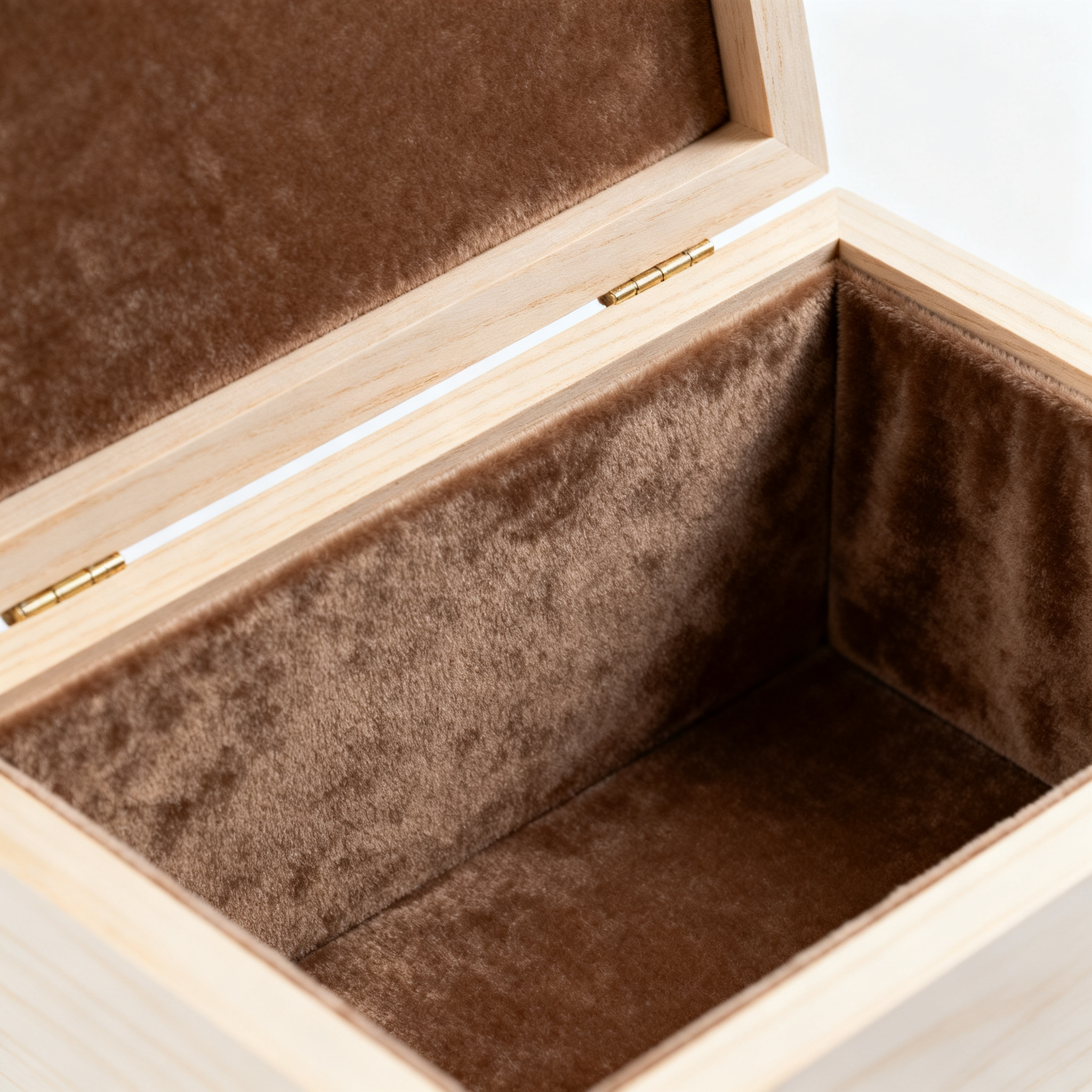
A simple check is to close the lid on a sheet of paper at four points around the perimeter and feel whether it grips evenly. Where it grips at two points and slips at two, the lid is not seating, and a gasket will not fix it. Recessing the hinge or adjusting the land is the fix, and it is a production decision rather than a parts decision.
Humidity and Lid Fit
Wood moves with humidity, so a lid fitted in a humid factory can bind in a dry room. A gasket adds a compressible layer that absorbs some of that movement, which is a genuine benefit in markets with wide seasonal swings. In a stable climate it is mostly unnecessary. That is why the same box may need a different closure for two destinations.
A Spec That Says What It Means
Write whether the box is required to be dust-tight, to feel sealed, or to be airtight, and state which of those the bag already provides. Specify the gasket material and its rebate, or state that no gasket is required. A spec that says airtight without saying what is inside invites a product that is hard to open and no more sealed than a plain lid.
See the closure guide for lid types; the long-term storage guide covers how the bag behaves over years.