A cost-structure breakdown buyers can use to compare quotes properly — and an RFQ checklist that gets comparable answers the first time.
Two quotes for the same pine urn, one at 6.80 and one at 9.40 per unit, look like a 38 percent difference in supplier greed. They are almost never that. They are usually a difference in what each quote includes, and the fastest way to lose money in this category is to compare unit prices without comparing the cost stack behind them.
This article breaks the unit price down into the components a buyer can actually interrogate, and ends with an RFQ checklist that forces the answers onto paper. The percentages below are indicative of our own cost structure at a mid-volume order, not a market survey; use them to know where to look, and ask each supplier for their own split.
Timber: 30–40% of Unit Cost
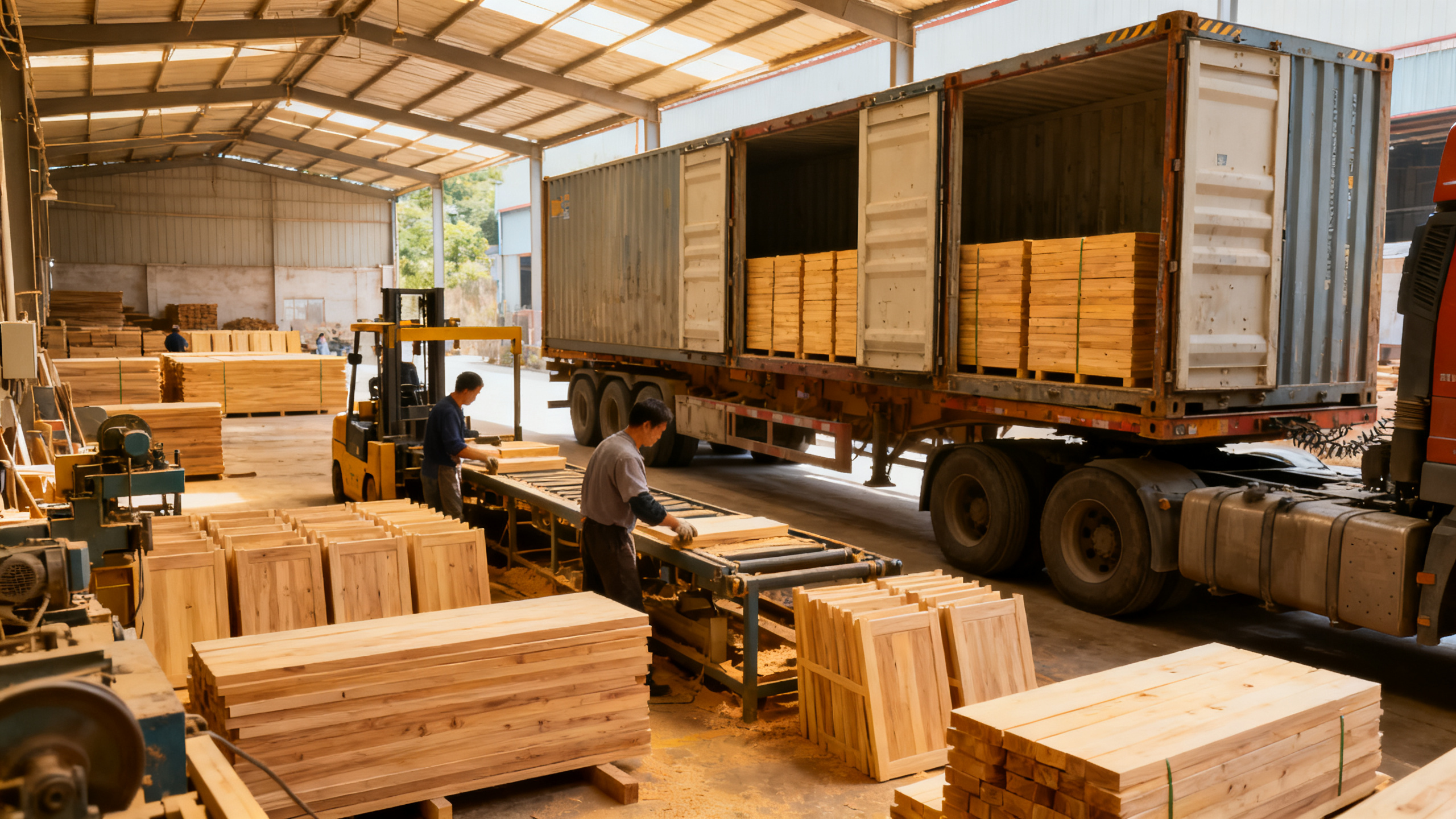
Timber is the largest single line, typically 30 to 40 percent of unit cost for pine and higher for walnut. What matters is not the log price but the yield: how many board feet of usable stock come out of a cubic metre after defects, knots and offcuts are removed. A supplier buying cheap short logs with heavy knots can end up with a higher effective material cost than one buying better stock. This is why a sudden price drop on a pine urn usually means the grade changed, not that the supplier got generous. Ask for the species and the grade, not just "pine".
Drying and Machining: 20–25%
Drying and machining is the second block, roughly 20 to 25 percent. Kiln drying consumes energy and ties up stock for weeks, and the heat treatment that ISPM 15 requires is achieved in the same schedule, which is one cost serving two purposes. Machining includes the CNC or spindle work, the joinery, and the waste from setup. A shape with more machining steps - a curved lid, a photo frame rebate, an ash drawer - carries more machining cost than a plain box, which is why a frame with a compartment costs more than a plain urn of the same exterior size.
Sanding and Finishing: 15–20%
Sanding and finishing is the third block, roughly 15 to 20 percent, and it is where quality variance hides. A 220-grit finish on an unfinished pine box is a genuine labour cost: belt sanding, orbital sanding, edge touching and inspection. A supplier sanding to 120 grit and calling it ready for paint looks identical in a photograph and saves real money. Ask for the grit, and ask for a sample you can feel.
Hardware, Packaging and Documentation
Hardware and accessories are the fourth, and they are the easiest to strip silently. A brass hinge, a chain stay, a felt base pad, a silicone gasket on a ceramic lid, an ash vial - each is a real cost, and each can be quietly downgraded to a steel hinge or a glued-in pad. When two quotes differ by 15 percent on a finished box, check the hardware line before assuming the wood is different.
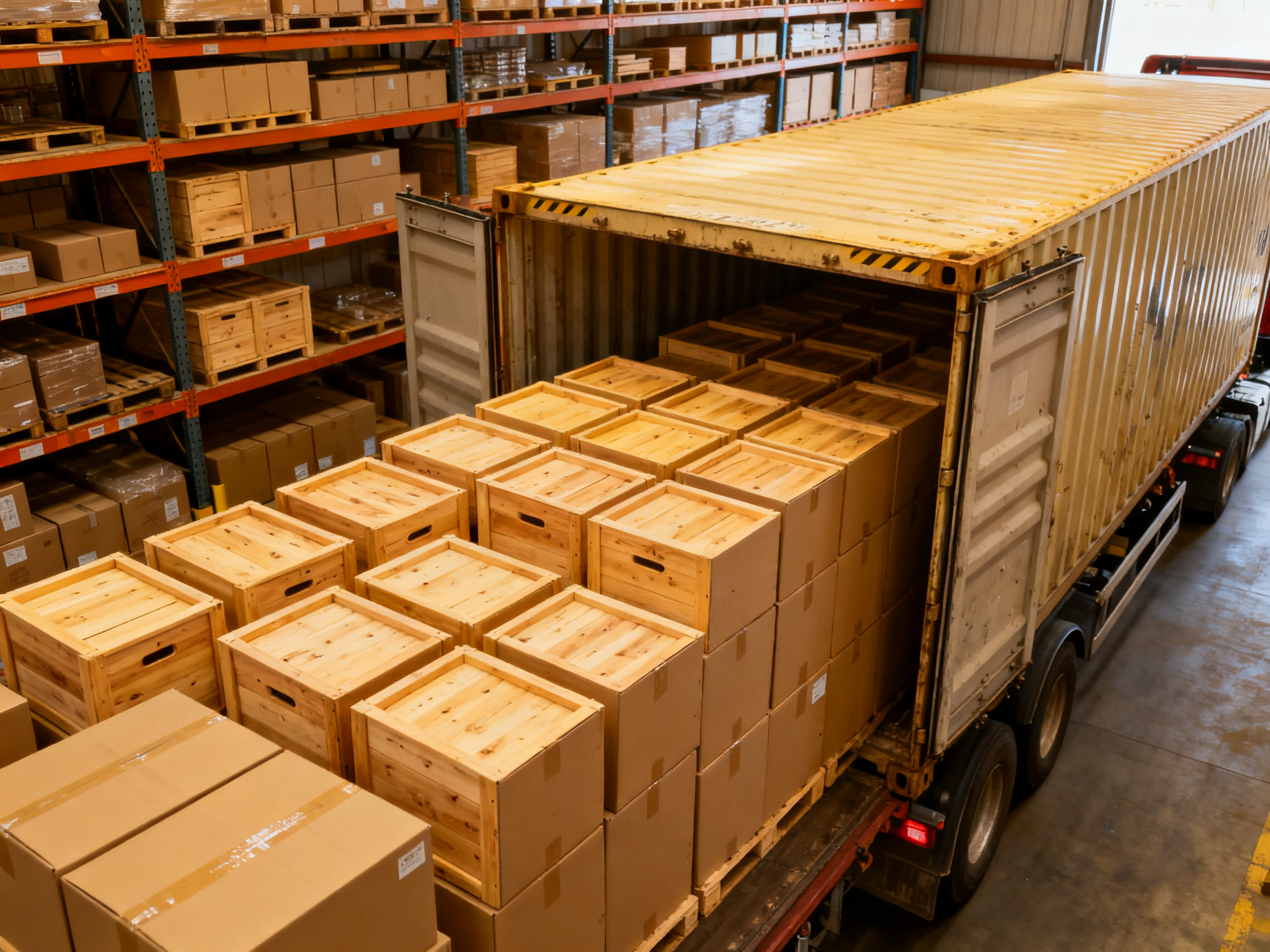
Packaging is the fifth and the most frequently underestimated, roughly 8 to 12 percent. A 5-layer carton with an inner divider, foam wrap, a pallet in good condition and edge protectors is a cost. A 3-layer carton without dividers saves money on the quote and produces breakage in transit, and the breakage is charged to you, not to the supplier, unless the contract says otherwise. Ceramic packaging is more expensive again, because the foam cradle is moulded rather than folded.
Documentation and compliance is a small but real line, perhaps 3 to 5 percent. The export registration, the phytosanitary certificate, the treatment record and the marked pallets all cost something, and a supplier without them can quote lower and still ship - until the container is held. This is the one line where paying more is unambiguously correct.
Commercial Lines Outside the Workshop
Then come the commercial lines that have nothing to do with the workshop: inland freight to port, ocean freight, insurance, bank charges, currency, and the payment terms themselves. A supplier quoting FOB and a supplier quoting CIF differ by the freight, and a supplier quoting DDP has absorbed duty and clearance into the number. Comparing a DDP price with an FOB price is comparing two different products. Ask every supplier to quote the same Incoterm, the same carton configuration, and the same payment terms.
Payment terms are a cost too. Thirty percent deposit with the balance against the bill of lading is standard. A supplier demanding full prepayment is pricing in its own cash flow risk, and a supplier offering net 30 is pricing in yours. Neither is free.
The RFQ Checklist
The RFQ checklist that makes all of this comparable is short. State: product and slug, target quantity, destination port or FBA warehouse code, required Incoterm, packing configuration wanted, whether engraving is included, and the documents you require. Ask each supplier to return: unit price at the tier, MOQ per size, lead time from deposit, carton count and gross weight per pallet, moisture content specification, sanding grit, hardware specification, and the document list included in the price.
When two quotes are answered against that checklist, the comparison becomes arithmetic instead of inference. In our experience the quote that looked 38 percent more expensive usually turns out to be 8 to 12 percent more expensive once packaging, hardware, documents and freight are normalised - and occasionally it turns out to be cheaper, because the low quote was for a lighter carton and a 120-grit finish that would have generated returns.
That is the whole discipline: compare stacks, not numbers. A buyer who does it once will do it for every category afterwards.