Carton count, gross weight, pallet pattern and container fill — the numbers that decide your landed cost, explained line by line.
Most first-time importers read a quotation closely and a packing list not at all. That is backwards. The quotation tells you the unit price; the packing list tells you what the freight, the duty and the warehouse handling will actually cost, and those three items often exceed the difference between two competing unit prices.
The Five Numbers That Matter
A packing list for a container of pet urns has five numbers that matter: cartons, units per carton, net weight, gross weight, and pallet count with its pattern. Everything else on the sheet is derived from those. Here is what each one does to your landed cost.
Cartons and Units per Carton
Cartons and units per carton set your handling cost. A 40-foot high-cube holds roughly 65 to 68 cubic metres usable, but cartons rarely fill it perfectly, because the pallet footprint and the stacking height decide the real count. A house-shape urn packed 12 per carton is efficient; a mini keepsake packed 100 per carton is efficient in a different way, because the carton is small and the pallet can be built tighter. When a supplier quotes per unit without stating cartons per pallet, ask for the pallet pattern drawing. A pallet that is 1.2 by 1.0 metres with cartons overhanging by 5 centimetres will be refused by some container lines and reworked at your cost.
Net Weight, Gross Weight and the Gap
Net weight is the product alone. Gross weight is product plus carton plus pallet plus any dunnage. The gap between them is your packaging overhead, and it is usually between 8 and 15 percent on wooden urns, higher on ceramic because of the foam cradles. This matters twice: once for freight, which is charged on gross weight or volume whichever is greater, and once for destination handling, where a pallet over a certain weight needs a forklift rather than a pallet jack. If you ship LCL, the freight is charged on weight-or-measure, so a light but bulky carton is billed on volume, and the packing list is where you find the cubic measurement.
Pallet Count Wins or Loses the Container
Pallet count is where container utilisation is won or lost. A standard pallet of 1.2 by 1.0 metres, loaded to 1.8 metres, holds about 2.16 cubic metres. Twenty such pallets is 43 cubic metres, which leaves a 40-foot container roughly two-thirds full. The remaining space is either filled with additional loose cartons on top, or it sails empty and you pay for air. Ask your supplier for the loading plan, not just the carton count: pallets plus loose cartons plus the container's internal dimensions, with the fill percentage stated.
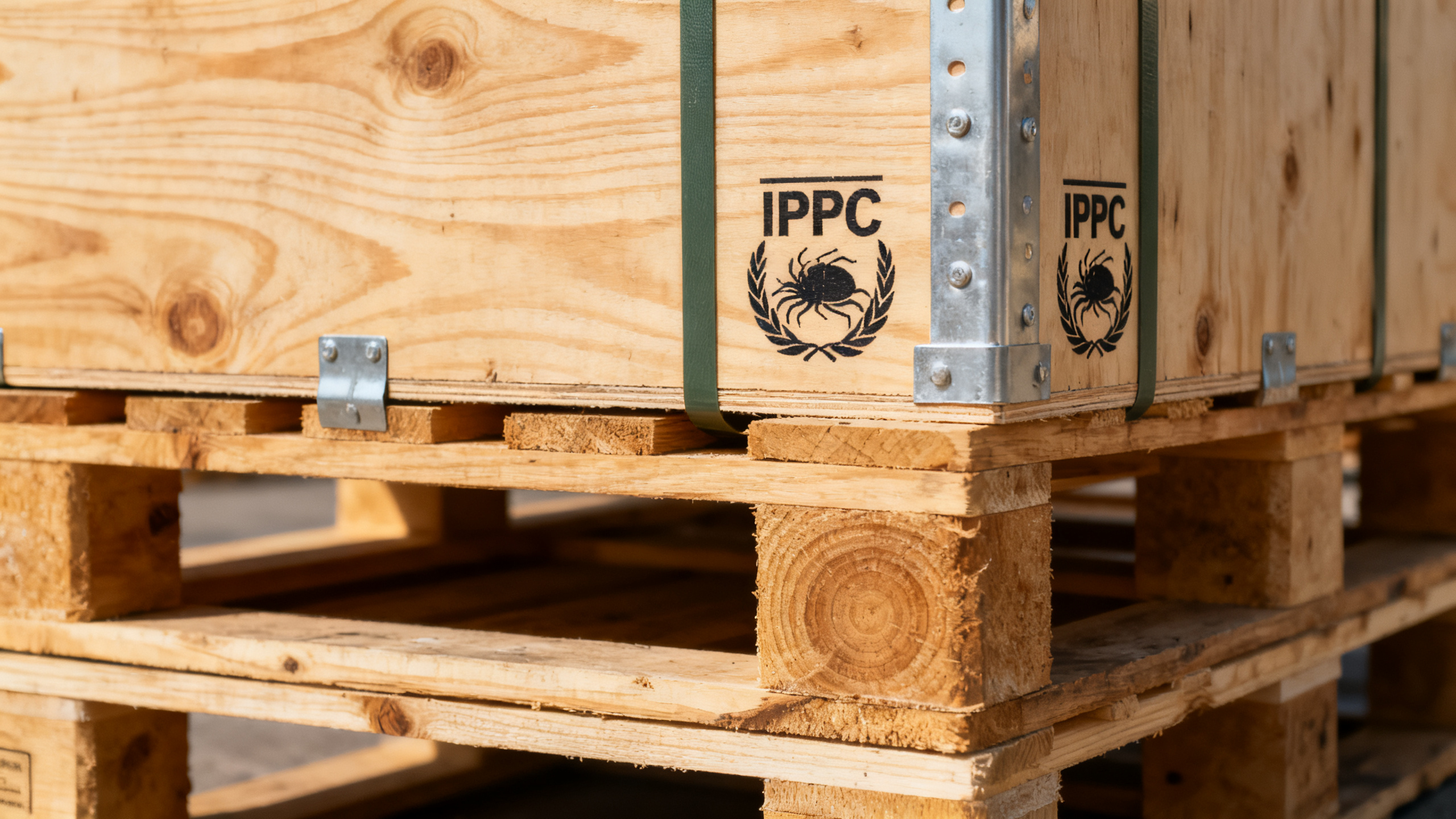
One more number that appears on good packing lists and is missing from bad ones is the pallet mark photograph reference. Each pallet carries an IPPC mark with a facility number, and a packing list that references a photo per pallet turns a customs query into a two-minute email instead of a two-week investigation.
Damage, Drop Tests and LCL
Then there is the damage question. Cartons are drop-tested to a standard such as ISTA 1A before a new size is released, but the test is done on a sample, and the failure mode in real shipments is usually compression, not impact: the bottom layer of a three-high pallet stack carries the weight of the two above it for weeks at sea. A packing list that states stacking limits - for example, maximum three pallets high, or no stacking on ceramic - tells you the supplier has thought about it. If the sheet is silent, ask.
For LCL shipments the arithmetic changes again. LCL consolidators co-load your pallets with other cargo, so your cartons may be rehandled twice more than in FCL, and the break-bulk fee is charged per weight ton or per cubic metre. On small orders under about 15 cubic metres, LCL plus destination charges can add a meaningful percentage to the landed cost, which is why many buyers of mini keepsakes ship air freight instead: the value density is high enough that air is competitive once the destination charges are counted.
A Worked Comparison
A worked comparison makes the point. Take 500 house-shape urns at 12 per carton: 42 cartons, each about 0.06 cubic metres, so 2.5 cubic metres total, roughly one pallet and a bit. That ships LCL comfortably and the packing list is one page. Take 5,000 mini keepsakes at 100 per carton: 50 cartons, each small but numerous, and the pallet pattern decides whether it is one container or two.
The habit worth building is simple: before approving a bulk order, ask for a draft packing list with the pallet pattern and the container fill percentage, and check that gross weight and cubic volume match what your forwarder quoted. When those three agree, the quote you signed is the cost you will pay. When they do not, the difference shows up as a surprise invoice after the goods have already left the port.