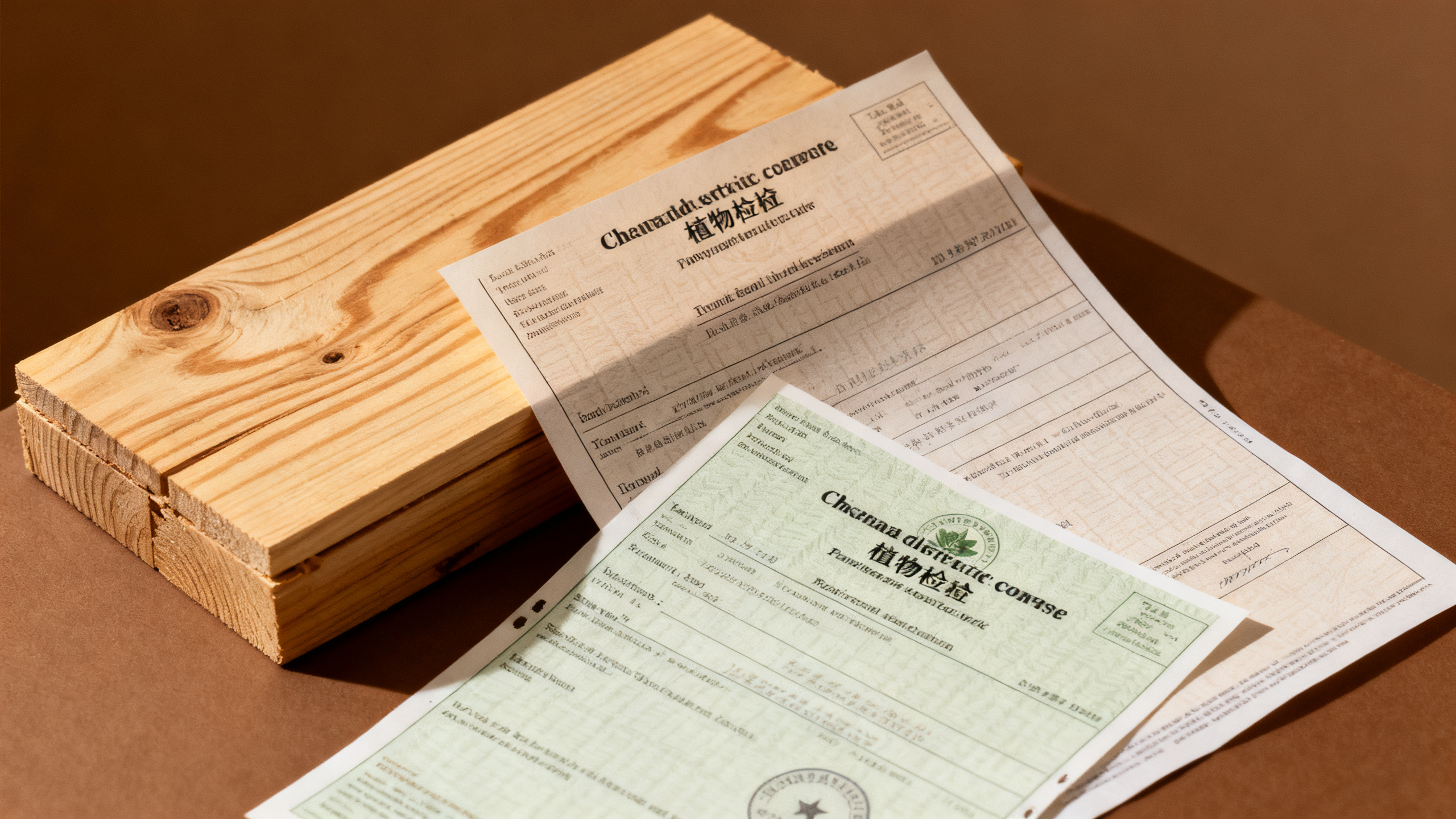
Three destinations, three different documents. A side-by-side look at what APHIS, CFIA and the EU actually require for wooden pet urn shipments.
Buyers often assume that wood packaging compliance is one global checklist. It is not. The United States, Canada and the European Union all build on the same ISPM 15 standard, but each adds its own documentation requirements, inspection rates and, in one case, an outright refusal to accept a certificate in place of the mark. Getting this wrong is expensive: a held container at a port of entry costs demurrage, storage and, in the worst case, return freight that the importer pays.
This article sets out what each destination actually requires, based on the regulations in force rather than on what a forwarder remembers from five years ago. It is written for importers of wooden pet urns, memorial boxes and keepsake frames, where the goods are solid wood and the pallets under them are also solid wood.
The Common Foundation: ISPM 15
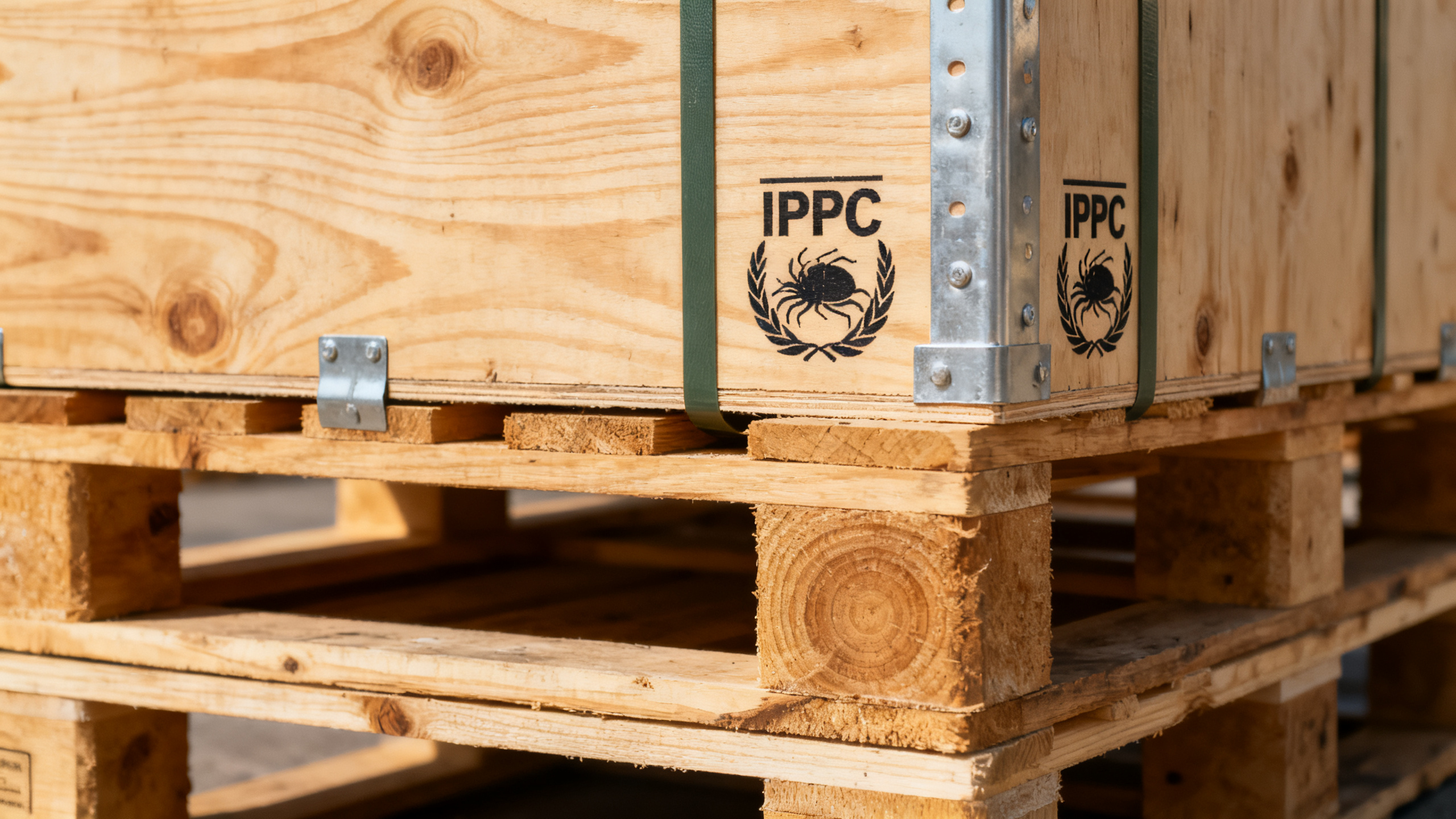
The common foundation is ISPM 15, the international standard for wood packaging material in trade. It requires that wood packaging - pallets, crates, dunnage, and any solid wood used to support or protect a consignment - be treated by an approved method and marked with the IPPC symbol. Heat treatment is the dominant method: the core of each piece of wood must reach at least 56 degrees Celsius for a minimum of 30 continuous minutes. Methyl bromide fumigation is still permitted in some markets, applied at 48 grams per cubic metre as a first dose at temperatures above 21 degrees Celsius, but it is being phased down because it depletes ozone.
The Mark: Four Elements, No Exceptions
The mark itself has four required elements: the IPPC graphic, the ISO two-letter country code, the unique facility number assigned by the national plant protection organization, and the treatment code. The country code and facility number are separated by a hyphen. A pallet marked only with "HT" and a country code, without the facility number, is not compliant, and inspectors do read the marks.
United States: APHIS Does Not Certify Packaging
For the United States, the important detail is that APHIS does not issue phytosanitary certificates for wood packaging material used in shipping. Compliance is demonstrated by the ISPM 15 mark, not by a certificate. A certificate becomes relevant only when the wood packaging itself is the commodity being imported, which is not the case for a shipment of urns on pallets. In practice this means US importers should expect a phytosanitary certificate covering the goods where the goods are regulated plant articles, plus correctly marked pallets, and should not expect a separate certificate for the pallets.
Canada: The Destination That Catches Buyers
Canada is the destination where buyers get caught most often. The CFIA directive D-98-08 governs wood packaging, and its current revision, effective from 1 April 2026, states clearly that a phytosanitary certificate accompanying wood packaging material from China is not accepted as a substitute for the ISPM 15 mark. Heat treatment must additionally be supported by a declaration confirming that each piece of wood reached 56 degrees Celsius at the core for at least 30 minutes. Shipments that fail are refused entry or returned, and the cost of that falls on the importer. For a buyer, the practical consequence is that the treatment record matters as much as the mark, and it has to be retrievable months later.
European Union: Regulation 2016/2031
The European Union approach is set by Regulation (EU) 2016/2031. Article 43 requires that wood packaging material entering the Union has been subjected to an approved treatment, carries the mark, and is made of debarked wood. Debarking is an explicit requirement that buyers sometimes overlook when they assume a pallet is compliant because it is marked. Decision (EU) 2018/1137 adds a minimum inspection rate of at least 1 percent for consignments of the listed goods originating in China, so the probability of a physical check is real rather than theoretical, and photographs of the pallet marks before loading are worth having.
When the Exemption List Applies
There is also an exemption list that saves freight cost when it applies. Wood packaging made entirely from processed wood - plywood, particle board, oriented strand board, fiberboard and veneer - is exempt from ISPM 15, as is wood thinner than 6 millimetres. Wine and whisky barrels are exempt, and Canadian-origin material shipped to the United States is exempt under a bilateral arrangement. The trap is mixed construction: a plywood crate with solid wood skids is not exempt, because the solid wood components still need treatment and marking.
The Sequence We Follow on Every Consignment
The practical sequence we follow for every export consignment is therefore: confirm whether the goods themselves are regulated plant articles, dry and machine the product, pack into cartons, palletise on marked solid wood or switch to a pressboard or plastic pallet to remove the requirement entirely, photograph every pallet mark, and issue the document set before the vessel sails. That order matters because the phytosanitary certificate is issued after the goods are packed and marked, not before.
For buyers, there are four questions worth adding to every purchase order. First, are the goods a regulated plant article in my destination, and if so which certificate applies. Second, are the pallets solid wood, and if so what is the facility number on the mark. Third, is there a treatment record showing core temperature and duration. Fourth, is the wood debarked, if the destination is the EU. A supplier who can answer all four without hesitation is a supplier whose documentation will survive an inspection.
The cost of compliance is small compared with the cost of a refused container. Marked pallets, a kiln record and a certificate add a modest amount per shipment; demurrage, storage and return freight on a 40-foot container of urns do not. If you are moving from a trading company to a direct factory, ask for the last three document sets they issued for your destination and read them before you commit to a first order.